 EN
EN

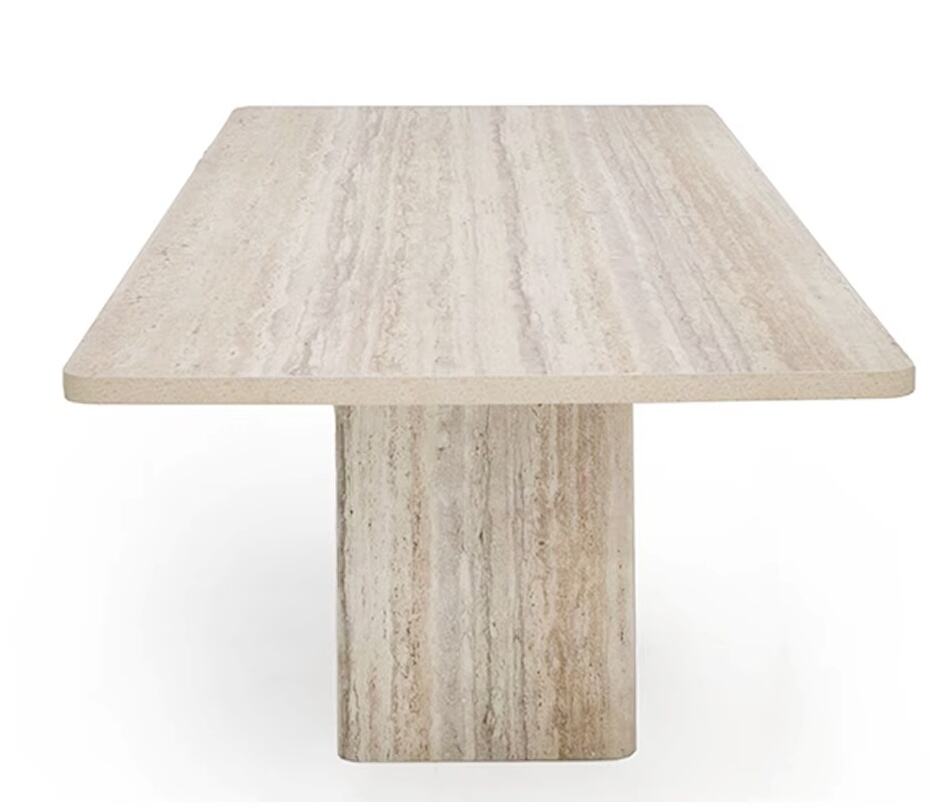
What Determines the Durability of Travertine Tables?
Travertine tables derive their durability from three key factors:
- Material composition: Formed from calcium carbonate deposits, travertine ranks 4–5 on the Mohs hardness scale–softer than granite (6–7) but harder than most marbles (3–5)
- Porosity: With moderate absorption rates (6–12% according to ASTM testing standards), untreated travertine is susceptible to stains but outperforms limestone and sandstone
- Finish type: Honed or tumbled finishes hide minor scratches better than polished surfaces
Travertine vs. Other Natural Stones: How Does It Hold Up?
| Travertine | Granite | Marble | |
|---|---|---|---|
| Scratch resistance | Moderate | High | Low |
| Heat tolerance | Excellent (up to 480°F) | Exceptional | Good |
| Acid resistance | Poor (etches easily) | High | Very low |
While granite outperforms travertine in scratch resistance, travertine’s thermal stability makes it ideal for outdoor settings with frequent temperature shifts. Its natural veining also helps conceal wear more effectively than uniform stones like quartzite.
The Natural Stone Paradox: Beauty vs. Structural Vulnerability
How travertine gets those beautiful layers and porous look comes at a cost structurally speaking. When manufacturers fill travertine with resin, they're actually making it last longer too. Tests show these filled versions can hold up around 40 to maybe even 60 percent better than regular travertine, although folks do notice the natural grain becomes less visible after treatment. For things like tables or countertops where strength matters most, many designers still go with filled travertine because it holds up better day to day while keeping most of that stone's character intact. Sure, purists might argue about losing some of the raw beauty, but practicality wins out for most homeowners looking for something both attractive and durable.
Performance in Real-World Conditions: Expectations vs. Reality
Field studies of residential travertine tables show:
- 92% retain functional integrity after 10 years with proper sealing
- Surface refinishing needed every 5–8 years for polished finishes
- Edge chipping occurs in 23% of samples, primarily in high-traffic commercial environments
These results confirm that while travertine requires more maintenance than engineered alternatives, its long-term performance justifies the care when managed correctly.
Scratch, Stain, and Heat Resistance: What You Need to Know
Travertine tables combine natural elegance with practical durability, provided users maintain realistic expectations. Though softer than granite or quartzite, its Mohs hardness of 4–5 supports daily use with appropriate protection. Let’s examine how it handles common household and office challenges.
Can Travertine Tables Resist Scratches and Daily Wear?
Due to its calcium carbonate base, travertine is more vulnerable to abrasion than engineered materials. A 2023 comparative study found visible scratches after 500+ steel wool cycles, while sintered stone endured 1,500 cycles without damage. To minimize wear:
- Use coasters under heavy or rough-bottomed items
- Avoid dragging ceramics, metals, or sharp objects across the surface
- Choose honed or tumbled finishes, which naturally disguise light scuffing
Stain and Moisture Resistance: Separating Myths from Facts
Unsealed travertine absorbs liquids within 3–5 minutes due to inherent porosity, as verified by independent lab tests. However, properly sealed surfaces repel up to 78% of spills–including wine, coffee, and oils–for 6–8 hours. Key findings:
| Scenario | Unsealed Travertine | Sealed Travertine |
|---|---|---|
| Red Wine Spill | Permanent stain | Wipes clean |
| Oil Absorption | 90% penetration | <5% penetration |
| Moisture Damage | High risk | Minimal risk |
Sealing dramatically improves moisture resistance, making routine maintenance essential for spill-prone areas.
Heat and Spill Tolerance: Practical Use in Homes and Offices
Travertine tolerates heat well–up to 300°F (149°C)–outperforming most wood finishes. However, sudden thermal changes can cause microfractures. In a 2024 heat resistance study, travertine showed no discoloration from hot pans left for under 15 minutes. For best results:
- Use trivets or mats for items above 140°F (60°C)
- Wipe spills within 20 minutes to prevent seepage
- Avoid acidic cleaners, which degrade protective sealants over time
The Critical Role of Sealing in Protecting Travertine Tables
Why Sealing Is Essential for Travertine Longevity
The natural pores in travertine let liquids seep right through, which can cause stains and build up moisture inside over time when there's no sealant applied. Good quality sealers actually work by plugging those tiny gaps between the stone particles but still let air circulate through the material something really important for areas where humidity tends to hang around. Most flooring contractors will tell anyone who asks that proper sealing should be step one on any maintenance list for keeping natural stone looking good for years instead of just months before it starts showing signs of wear and tear.
Best Practices for Sealing Travertine Surfaces
- Surface preparation: Clean with a pH-neutral detergent and allow full drying before application
- Application method: Apply penetrating sealers using microfiber applicators for even coverage
- Curing time: Wait 24–48 hours before light use; extend curing in high-humidity conditions
Avoid silicone-based products that trap moisture beneath the surface. For optimal results, apply two thin coats rather than one thick layer.
How Often Should You Seal a Travertine Table?
Residential tables typically need resealing every 12–18 months, while commercial installations require treatment every 6–9 months. Outdoor tables in subtropical climates–with high humidity and UV exposure–may benefit from quarterly sealing to maintain protection.
Does Sealing Fully Prevent Damage? Industry Insights
While quality sealants reduce stain risks by 60–70%, they do not eliminate all vulnerabilities:
| Threat Type | Sealed Travertine Resistance | Unsealed Resistance |
|---|---|---|
| Acidic spills | Moderate (pH >3) | None |
| Scratches | Low improvement | None |
| Thermal shock | No protection | No protection |
Sealing works best as part of a broader protection strategy, including felt pads, coasters, and prompt spill cleanup–practices endorsed by stone conservation professionals.
Maintenance Tips for Preserving Your Travertine Table
Daily and Long-Term Care for Optimal Surface Performance
Effective maintenance starts with simple habits. Dust surfaces regularly with a soft, dry microfiber cloth to remove abrasive particles. Address spills immediately using a damp cloth and pH-neutral cleaners designed for natural stone–never vinegar, bleach, or other acidic solutions. For deeper cleaning:
- Weekly: Use a stone-safe cleaner with a nylon brush in circular motions
- Seasonal: Check for hairline cracks or degraded filler material
- Annual: Perform a water absorption test–immediate darkening indicates the need for resealing
Common Maintenance Mistakes to Avoid
Over 60% of travertine damage stems from improper care:
| Mistake | Consequence | Prevention Tip |
|---|---|---|
| Using generic glass cleaners | Etching and mineral degradation | Use ASTM-compliant stone cleaners |
| Skipping coasters | Acidic liquid stains (wine, coffee) | Use cork-backed coasters |
| Dragging heavy objects | Surface scratching | Attach felt pads to decorative items |
Preventive measures significantly extend the lifespan and appearance of travertine furniture.
Recommended Cleaning Products for Travertine Tables
Choose non-chelating cleaners that won’t strip away sealants. Look for products meeting ANSI A118.10 standards for compatibility with natural stone. Ideal formulations include:
- Biodegradable ingredients
- Neutral pH balance (6.5–7.5)
- No phosphates or chlorine
- Quick-drying properties
For outdoor use, select UV-stable sealants that resist solar degradation–critical for maintaining integrity across changing weather conditions.
Choosing the Right Finish for Maximum Durability and Style
Types of Travertine Finishes: Honed, Polished, Tumbled, Brushed
When it comes to travertine tables, there are basically four main finish options available, all trying to strike some sort of balance between looking good and actually working well. The honed finish gives off that smooth, non-shiny look which hides those annoying little scratches pretty well. Then we have polished ones that really catch the light and look super shiny, though they need constant cleaning to keep them looking nice. Tumbled finishes are different again with their rougher edges and that natural stone feel, whereas brushed surfaces tend to be slightly textured with that kind of country cottage vibe going on. A recent report from Stone Surfaces in 2023 showed something interesting too - around three out of every four interior designers suggest going for either honed or tumbled finishes when furnishing homes because these types just hold up better over time and don't require so much fussing with maintenance.
How Finish Type Affects Scratch and Stain Resistance
The surface texture makes all the difference when it comes to how well materials perform. Take travertine for instance polished surfaces actually show those tiny pores much better, which means any spills or marks become around 42% more visible compared to when it's been honed smooth according to research from Natural Stone Institute back in 2024. Brushed and tumbled finishes work great at hiding small scratches and everyday wear and tear, though they do tend to trap dirt in those little grooves unless someone gets around to cleaning them properly. For places where accidents happen frequently such as kitchen countertops, going with a really tight hone finish paired with some kind of nano sealant treatment seems to cut down on liquid soaking into the stone by nearly 90 percent, which is pretty impressive if you ask me.
Best Travertine Finish for High-Traffic or Commercial Use
Durability takes priority in commercial spaces. A 2024 flooring study found brushed travertine withstands heavy foot traffic 30% longer than polished variants. Honed finishes are top-rated for offices and restaurants due to their slip resistance and non-reflective surface. Establishments using honed travertine report 65% fewer replacement costs over five years.
Matching Aesthetics and Functionality in B2B and Home Settings
| Finish Type | Best For | Maintenance Level | Scratch Resistance |
|---|---|---|---|
| Honed | Offices, Kitchens | Moderate | High |
| Polished | Luxury Retail, Lobbies | High | Medium |
| Tumbled | Outdoor/Casual Dining | Low | Medium-High |
| Brushed | High-Traffic Corridors | Low | High |
For hybrid environments requiring both style and resilience, textured options like brushed travertine meet 58% of architects’ specifications for modern workplaces. Homeowners often prefer tumbled finishes for their ability to blend seamlessly with family-friendly spaces while preserving a natural, inviting character.
Frequently Asked Questions
What is the most durable finish for a travertine table?
A honed finish is typically considered the most durable for travertine tables, especially in high-traffic areas, as it provides a non-reflective, slip-resistant surface that conceals minor scratches well.
How often should I reseal my travertine table?
Resealing should be done every 12–18 months for residential tables and every 6–9 months for commercial installations. Outdoor tables with high humidity exposure may need quarterly resealing.
Can travertine tables resist heat?
Yes, travertine tables tolerate heat up to 300°F, but it’s recommended to use trivets for items exceeding 140°F to prevent microfractures from sudden temperature changes.
Do travertine tables stain easily?
Untreated travertine can stain easily due to its porosity. Sealing the surface helps repel liquid spills significantly, reducing the risk of staining.
Table of Contents
- What Determines the Durability of Travertine Tables?
- Travertine vs. Other Natural Stones: How Does It Hold Up?
- The Natural Stone Paradox: Beauty vs. Structural Vulnerability
- Performance in Real-World Conditions: Expectations vs. Reality
- Scratch, Stain, and Heat Resistance: What You Need to Know
- The Critical Role of Sealing in Protecting Travertine Tables
- Maintenance Tips for Preserving Your Travertine Table
- Choosing the Right Finish for Maximum Durability and Style
- Frequently Asked Questions