 EN
EN

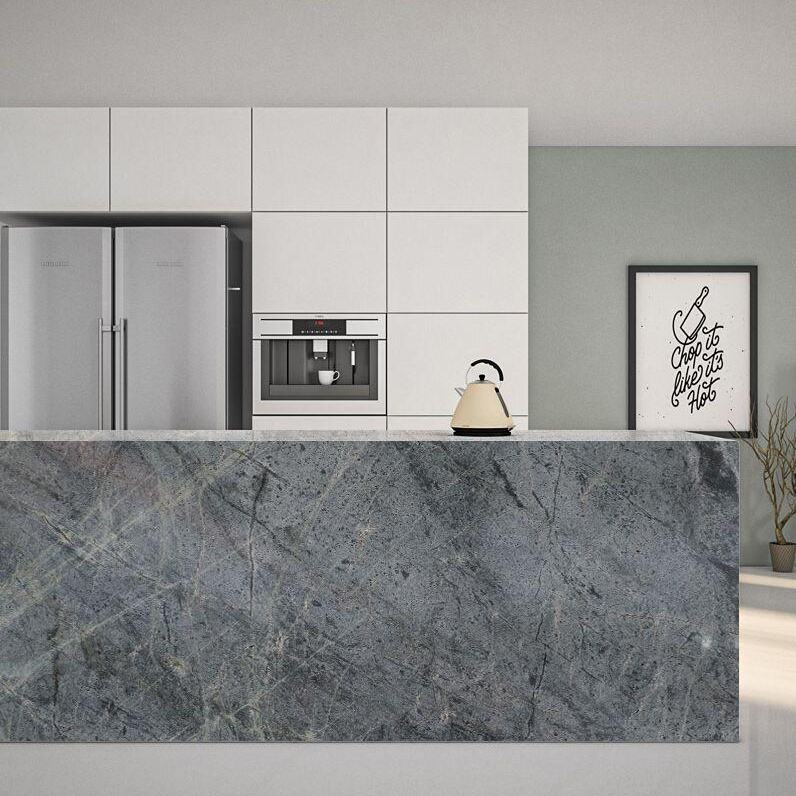
Granite Slabs: Natural Origin and Low-Processing Advantages
Geological formation and minimal chemical processing vs. engineered stone
Granite slabs come from deep inside the earth where molten rock slowly cools and hardens over millions of years. What makes granite special is how these minerals arrange themselves naturally during this long cooling period, creating those distinctive patterns we see on countertops without any man-made stuff mixed in. Engineered quartz tells a different story altogether. About 93 to 95 percent of it is actually ground up quartz particles glued together with various chemicals and colorants through some pretty intensive manufacturing processes. Granite doesn't need nearly as much messing around after it comes out of the ground. Just cut it into shape and polish the surface, basically leaving all its original strength intact without needing any kind of binding agents or synthetic materials added later on. The fact that granite skips this whole resin curing step means fewer harmful VOCs getting released into our homes compared to those manufactured surfaces, making it a cleaner option for people concerned about indoor air quality.
Energy use comparison: quarrying + finishing granite slabs vs. manufacturing quartz or solid surface alternatives
Granite slabs actually require far less energy throughout their entire life cycle when compared to those fancy engineered materials we see everywhere now. Let's break it down: getting granite out of the ground takes around 38 megajoules per square meter mainly because of all that diamond wire cutting and moving stuff around. Then there's another 15 MJ/m² just for polishing it up nicely. But look at what happens with engineered quartz instead. They need 42 MJ/m² just to crush the raw quartz, and then a whopping 68 MJ/m² for heating up that resin until it hardens properly. And if we talk about solid surfaces made from acrylic composites? Those bad boys go way over 120 MJ/m² because making them involves lots of energy hungry chemical processes. Sure, there's some environmental impact from quarry operations, but overall granite still manages to save between 30 and 40 percent in total energy consumption versus those synthetic options. Plus, granite fabrication uses about 60 percent less water too since most engineered stones need constant water for cooling systems and washing during production.
Quarrying Impacts: Balancing Durability with Ecological Cost
Carbon footprint, land disturbance, and biodiversity loss — evidence from USGS and IEA reports
Extracting granite comes at a cost to the environment. The USGS reported in 2023 that American quarries release about 1.2 million metric tons of carbon dioxide every year. Looking at energy usage, the International Energy Agency found in their 2024 study that old fashioned quarry methods consume roughly 40 percent more power compared to making engineered stone products. When companies dig for granite on the surface, they tend to move between five and seven acres worth of land at each location. This displacement breaks up habitats and can slash local biodiversity by around 30%, according to various watershed research projects. Some newer quarries are trying to fix this problem through staged restoration efforts. They plant native plants back in areas where mining happened, usually getting these green spaces restored within about eighteen months after operations stop.
The durability paradox: how granite slab longevity offsets initial extraction impact over time
Granite might have some upfront environmental costs, but what makes it worth considering is how long it lasts. We're talking about natural stone that stays strong and beautiful for more than half a century, which beats most man-made materials by threefold. Looking at things over 60 years, granite actually produces around two thirds less carbon compared to those materials that need replacing all the time, as shown in a recent USGS study on minerals. The bottom line here is pretty simple: when people choose granite slabs that will last for generations instead of cheaper options that wear out fast, they're making an environmentally smart decision. Even though there are some initial negatives, the fact remains that granite keeps performing reliably decade after decade without needing replacement.
Sustainable Fabrication and Responsible Sourcing of Granite Slabs
Water reuse, dust control, and high-efficiency CNC machining in modern slab fabrication
Modern granite work shops are getting greener these days thanks to closed loop water systems that actually recycle around 90 to 95 percent of what gets used during those cutting and polishing processes. The wet edge technique helps keep dangerous silica dust at bay while using less water than older methods. For cutting slabs, high efficiency CNC machines have become pretty standard now. These machines follow smart tool paths that allow for super accurate cuts down to the millimeter level. This approach cuts down on wasted materials by roughly 15 to 20 percent when compared with traditional hand cutting techniques. Plus, these newer systems use about 30 percent less energy per square foot of granite processed. They also speed things up quite a bit which means faster turnaround times for customers without compromising on the final product quality.
Transport emissions and the environmental benefit of regional granite slab sourcing
The transportation aspect makes up around 25 to 40 percent of the total carbon footprint associated with granite, so where it comes from matters quite a bit. When companies source granite within about 500 miles instead of shipping it across continents, they cut down on transportation emissions by roughly 60 to 80 percent. Looking at the numbers, domestic transport releases about 0.15 kilograms of CO2 per ton mile traveled, which is actually less than half what happens during overseas freight shipments that clock in at around 0.35 kg. By focusing on regional sources, we not only avoid those long ocean journeys but also give local businesses a boost while taking advantage of granite's natural abundance across different regions. This approach offers environmental benefits alongside the added bonus of greater design options since granite formations vary widely depending on location.
End-of-Life Options: Recycling, Reuse, and Third-Party Certifications for Granite Slabs
NSF/ANSI 373, LEED v4.1, and ISO 14001 — what they validate (and where they fall short) for granite slabs
Third party certifications set some pretty important markers when it comes to sustainability claims. Take NSF/ANSI 373 for instance. This one checks if quarries are operating responsibly and whether water gets conserved during production processes. Then there's LEED v4.1 which gives bonus points to projects that source granite locally, encouraging buildings that have less environmental impact overall. The ISO 14001 certification covers environmental management systems, though interestingly enough it doesn't look at ethical issues throughout the supply chain or how products get transported. There's still a big hole here though nobody seems to be addressing transport emissions properly. Most standards also fail to require manufacturers to use recyclable backing materials on those resin treated slabs we see so much these days.
Reclaimed granite markets, technical reuse pathways, and infrastructure gaps in recycling granite slabs
Salvage yards are finding new homes for reclaimed granite these days, using it for things like bathroom vanities and around fireplaces, which keeps these materials useful for another three decades or so. From a technical standpoint, leftover granite slabs get broken down into aggregate material for construction projects. But here's the catch: just about 12 percent of all that demolition debris actually gets reused because of real world problems. Getting materials to where they need to go is tough enough, but then there's also the mess from old adhesives stuck to surfaces and the fact that nobody really has good systems in place for collecting this stuff across different areas. The bottom line? Processing these materials costs too much money and we don't have proper facilities set up anywhere near where the work happens. Setting up local processing centers might help fix this problem though. These hubs would cut back on what goes into landfills while making the whole stone business more sustainable over time.
FAQ Section
What are granite slabs used for?
Granite slabs are commonly used for countertops, flooring, and decorative surfaces due to their durability and aesthetic appeal.
How does granite's natural origin benefit indoor air quality?
Granite requires minimal chemical processing, which reduces the release of harmful VOCs, making it a cleaner choice for indoor environments.
How significant is the environmental impact of quarrying granite?
While quarrying has ecological impacts, granite's longevity and lower lifetime carbon footprint can offset some of these initial environmental costs.
What sustainability certifications apply to granite slabs?
Certifications such as NSF/ANSI 373, LEED v4.1, and ISO 14001 validate various sustainability aspects, but often overlook transport emissions and supply chain ethics.
Can granite slabs be recycled or reused?
Yes, reclaimed granite can be repurposed for various applications, although recycling infrastructure and logistics remain challenging.