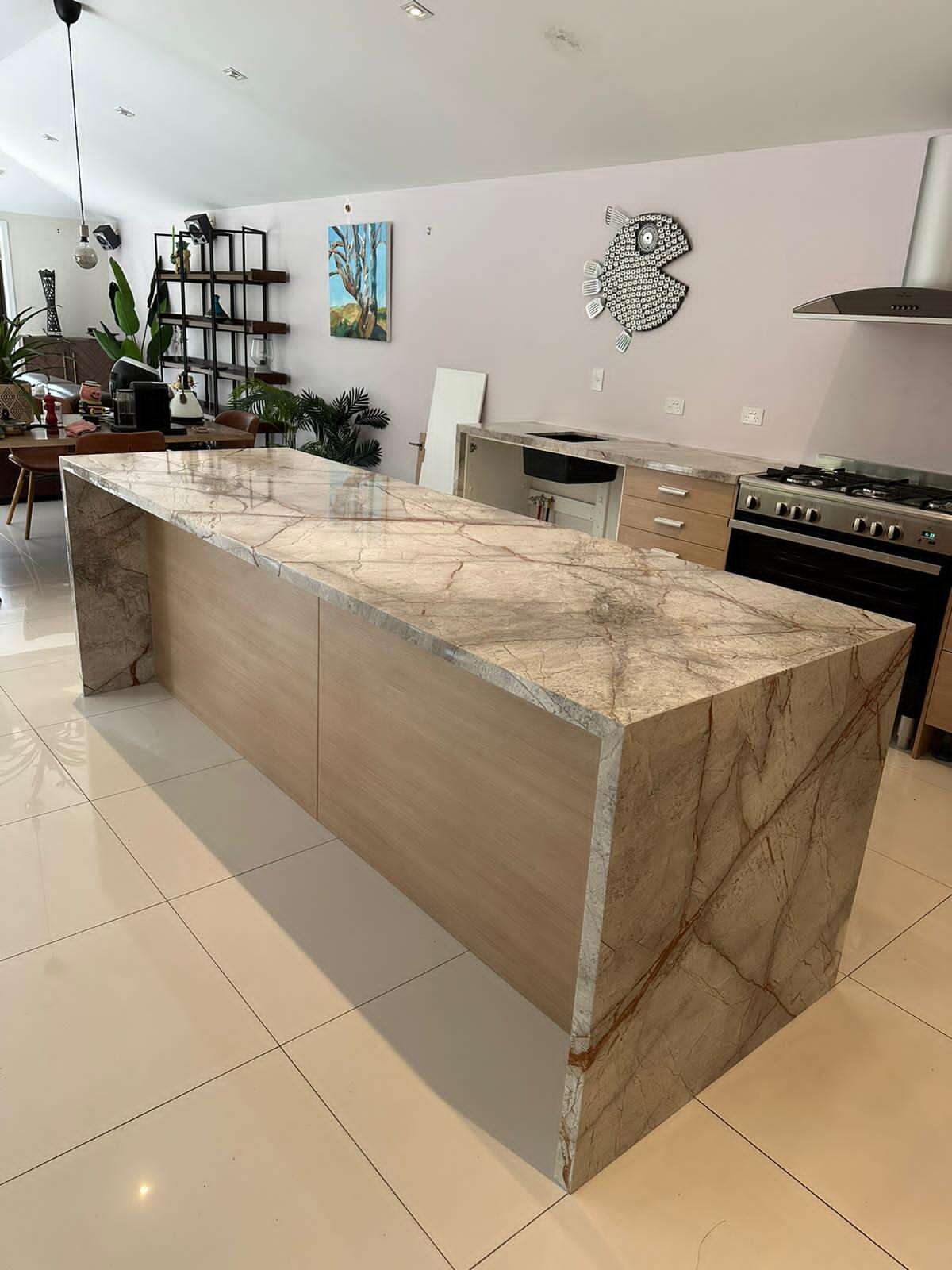
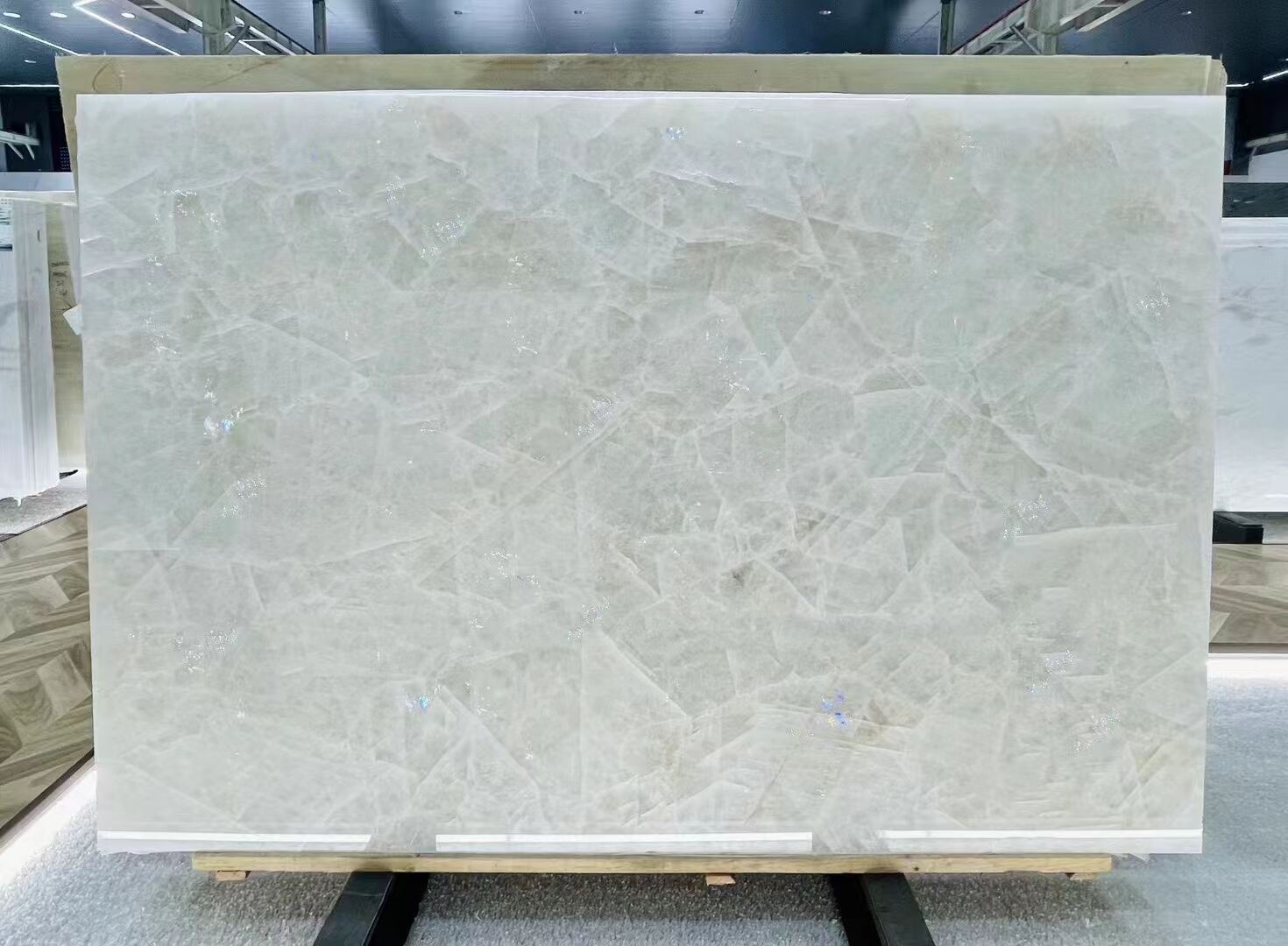
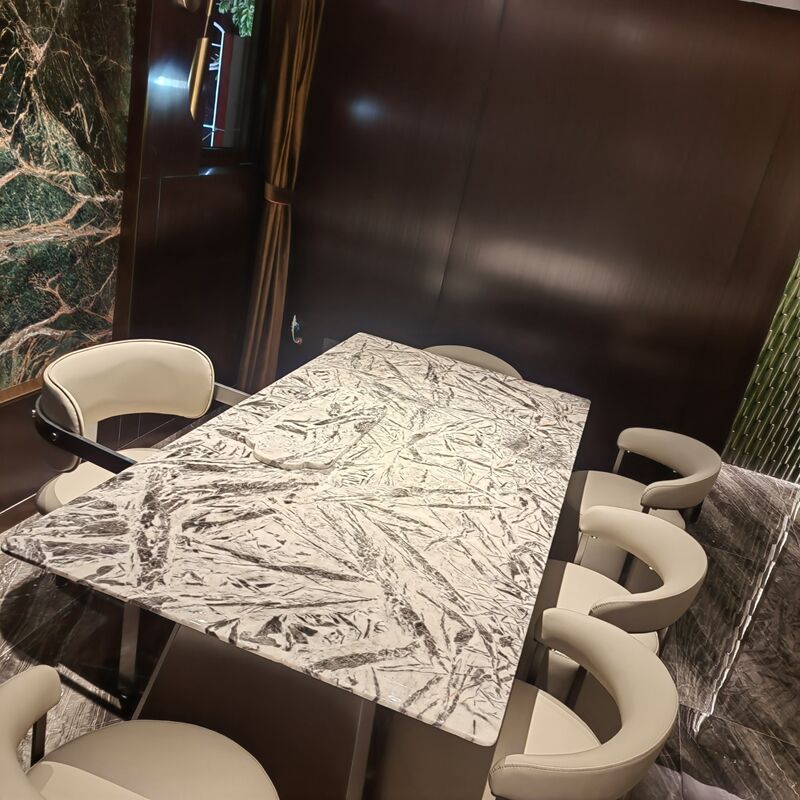
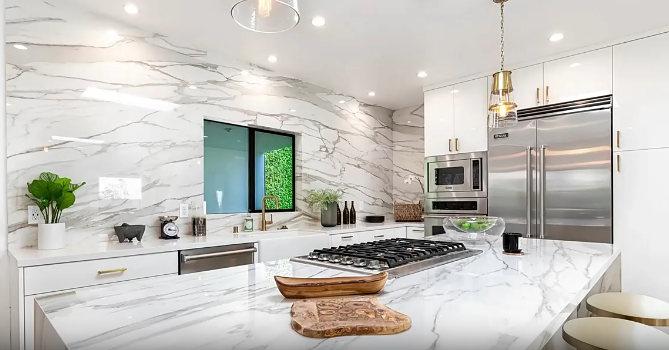
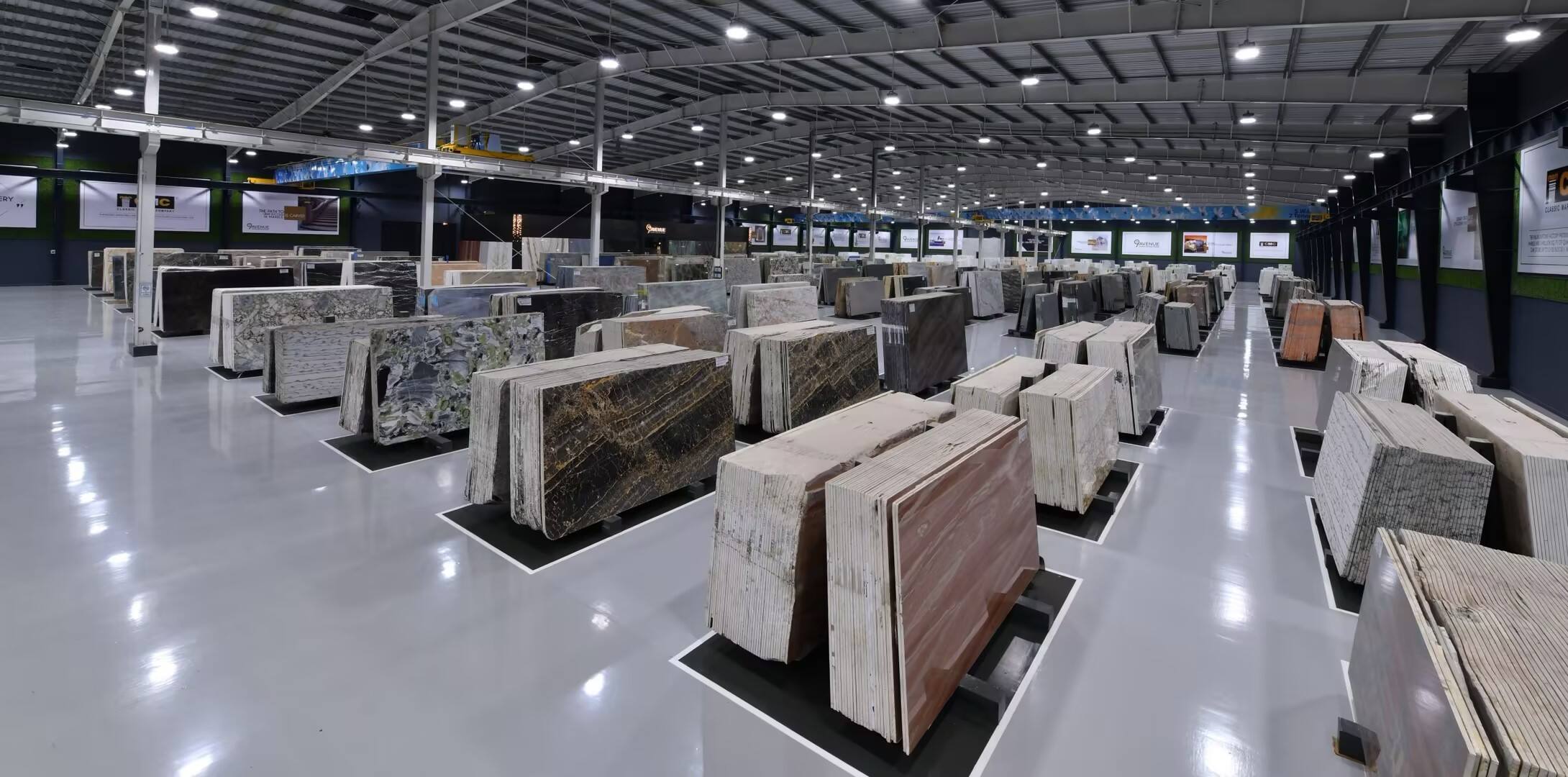
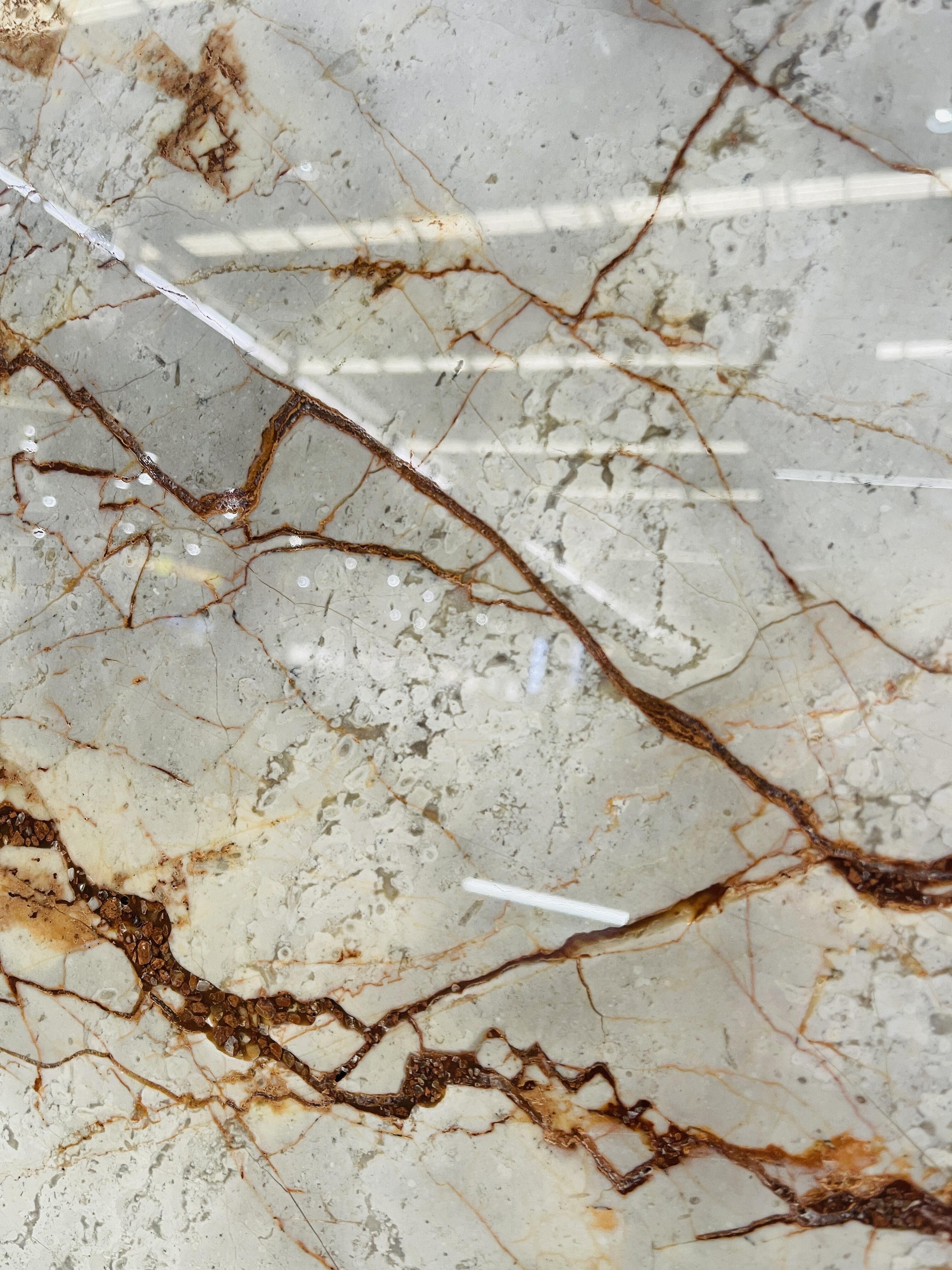
Travertine slabs for countertops are specialized natural stone solutions engineered to meet the functional and aesthetic demands of high-use surfaces in residential and commercial spaces, such as kitchens, bathrooms, hotel bars, and office break rooms. GHY STONE, a premier manufacturer with over three decades of expertise in high-quality stone products, fabricates these slabs using premium travertine varieties, precision cutting technologies, and advanced surface treatments (filling, sealing, scratch-resistant coating), ensuring they withstand daily wear—including heat, impact, and spills—while retaining travertine’s signature warm texture and natural beauty. The material selection for travertine slabs for countertops prioritizes durability and performance, leveraging travertine’s inherent properties while addressing its natural porosity. GHY STONE sources travertine from reputable quarries in regions renowned for high-quality deposits, including Italy’s Tivoli (known for dense, uniform travertine with warm beige tones), Turkey’s Bursa (offering travertine with rich gold and ivory hues), and Iran’s Naein (featuring subtle vein patterns and high compressive strength). Each travertine block undergoes rigorous pre-processing inspections to eliminate slabs with structural flaws—such as large cracks, uneven density, or excessive porosity—that could compromise countertop performance. The selected travertine has a density of 2.65–2.75 g/cm³, a flexural strength of 11–13 MPa, and a water absorption rate of ≤3% after filling, ensuring resistance to impact from heavy objects (e.g., pots, pans), heat up to 150°C (suitable for placing hot cookware), and daily abrasion. Countertop slabs are fabricated in thicker dimensions than wall or flooring slabs—typically 20mm–30mm—to provide structural stability for heavy use, with standard sizes ranging from 24in x 48in to 5ft x 10ft to minimize seams in large countertop layouts. A critical step in processing travertine slabs for countertops is pore filling: GHY STONE uses a high-performance, color-matched resin or cement-based filler to seal the stone’s natural pores, preventing moisture, stains (e.g., coffee, wine, oil), and bacteria from penetrating the surface. This filling process is applied in multiple layers, sanded smooth, and cured at controlled temperatures to ensure a seamless bond with the travertine, maintaining the stone’s natural texture while enhancing its durability. Every travertine slab for countertops undergoes post-production testing, including heat resistance tests (ASTM C1026, withstanding 150°C for 30 minutes without cracking), stain resistance tests (24-hour exposure to common household stains with no visible residue), and scratch resistance tests (ASTM D3363, achieving a pencil hardness rating of 4H), ensuring compliance with global standards for countertop materials. The aesthetic design of travertine slabs for countertops focuses on balancing functionality with visual appeal, offering a range of surface treatments and color options to suit diverse design styles. Honed travertine countertop slabs (15–20 gloss units) deliver a smooth, matte finish that softens the stone’s texture, creating a calm, sophisticated look ideal for modern kitchens, spa bathrooms, or boutique hotel bars—popular color options include Ivory Beige (light beige with subtle gold undertones), Silver Gray (cool gray with soft white veins), and Cream White (off-white with minimal variation). Polished travertine countertop slabs (60–70 gloss units) create a subtle sheen that enhances the stone’s color depth without reflecting excessive light (avoiding glare in kitchens), making them suitable for high-end residential dining areas or commercial restaurant countertops—colors like Golden Honey (warm gold with brown veins) and Walnut Brown (deep brown with lighter veins) excel in polished finishes. For clients seeking a rustic or Mediterranean aesthetic, GHY STONE offers lightly tumbled travertine countertop slabs (processed with gentle abrasive tumbling to retain smoothness while adding subtle texture), suited for farmhouses, coastal homes, or Italian-style restaurants—colors like Terra Cotta (warm orange-brown) and Antique Ivory (off-white with soft gray pores) are popular for this treatment. Custom edge profiles are available to refine the countertop’s appearance, including bullnose (rounded edges for safety in family kitchens), beveled (angled edges for modern sophistication), ogee (curved edges for traditional elegance), and mitered (seamless corners for large island countertops). GHY STONE also provides vein-matching services to ensure adjacent slabs have complementary patterns, creating a cohesive look for large countertops or kitchen islands. Functional features of travertine slabs for countertops are engineered to simplify daily use and maintenance. The filled and sealed surface is non-porous, making it easy to clean with mild soap and water—no specialized cleaners are required for routine maintenance. The scratch-resistant coating (applied to both honed and polished slabs) withstands daily use, including cutting with knives (though cutting boards are recommended to preserve the finish) and sliding of kitchen appliances. For commercial settings (e.g., hotel bars, restaurant kitchens), the slabs are treated with an additional antimicrobial sealant that inhibits the growth of bacteria (e.g., E. coli, Salmonella), meeting hygiene standards for food-service areas. The natural thermal conductivity of travertine ensures the countertop remains cool to the touch, making it ideal for baking (e.g., rolling out dough) in residential kitchens. The slabs are also compatible with undermount sinks, backsplashes (including matching travertine wall tiles), and countertop appliances (e.g., induction cooktops), allowing for seamless integration into kitchen or bathroom layouts. Installation of travertine slabs for countertops requires precision to ensure stability, alignment, and compatibility with surrounding fixtures. GHY STONE provides detailed guidelines for professional installers, including substrate preparation: countertops must be supported by a sturdy, level base (e.g., plywood with cement board overlay for kitchens) to prevent sagging or cracking. The slabs are cut to size using diamond-tipped tools, with precise notches for sinks, cooktops, and faucet holes. A high-strength, low-VOC adhesive (formulated for stone countertops) is applied to the base, and the slabs are carefully positioned to align seams—seams are filled with a color-matched epoxy to create a nearly invisible joint. For large slabs (4ft x 8ft or larger), additional support brackets are installed underneath to distribute weight evenly. After installation, the slabs are sealed with a final coat of penetrating sealant to enhance stain resistance, and a 24-hour curing period is required before use. GHY STONE coordinates with installers to ensure timely delivery of slabs and provides post-installation inspections to verify quality. Maintenance of travertine slabs for countertops is straightforward, designed to preserve their appearance and performance over time. Daily cleaning involves wiping the surface with a soft, damp cloth and mild dish soap to remove spills, crumbs, or grease—abrasive cleaners (e.g., scouring pads, bleach) are avoided to prevent scratching or dulling the finish. For tough stains (e.g., dried food, wine), a non-abrasive stone cleaner (recommended by GHY STONE) is applied and gently scrubbed with a soft brush. The protective sealant should be replenished every 12–18 months (or annually for high-use commercial countertops) using a penetrating sealant formulated for travertine—this process takes 2–4 hours and requires the countertop to be clear of items during curing. Minor scratches can be buffed out with a fine-grit sanding pad (400–600 grit) followed by sealant application, restoring the finish without professional assistance. GHY STONE provides detailed maintenance guides to clients and offers troubleshooting support for common issues (e.g., etch marks, minor chips). GHY STONE’s commitment to sustainability is integrated into every stage of travertine slab for countertop production. Travertine is sourced from quarries with certified sustainable practices, including reforestation programs (planting native trees to restore mined areas), water recycling systems (reducing mining water use by 65%), and ethical labor standards (ensuring fair wages and safe working conditions for quarry workers). The fabrication process uses energy-efficient machinery that minimizes material waste, and production scraps (travertine dust, offcuts) are recycled into smaller stone products (e.g., coasters, decorative accents) or construction aggregate, reducing landfill waste. Adhesives, fillers, and sealants are low-VOC, ensuring indoor air quality for residential and commercial occupants—critical for spaces where food is prepared or consumed. The durability of travertine countertops (with proper maintenance, they last 20–30 years) reduces replacement frequency, lowering the long-term environmental impact of countertop solutions. Whether used to create a warm, inviting kitchen island in a family home, a sophisticated bar top in a luxury hotel, or a durable bathroom vanity in an office building, travertine slabs for countertops by GHY STONE deliver unmatched performance, natural beauty, and versatility—setting the standard for premium stone countertops in diverse applications.
 EN
EN