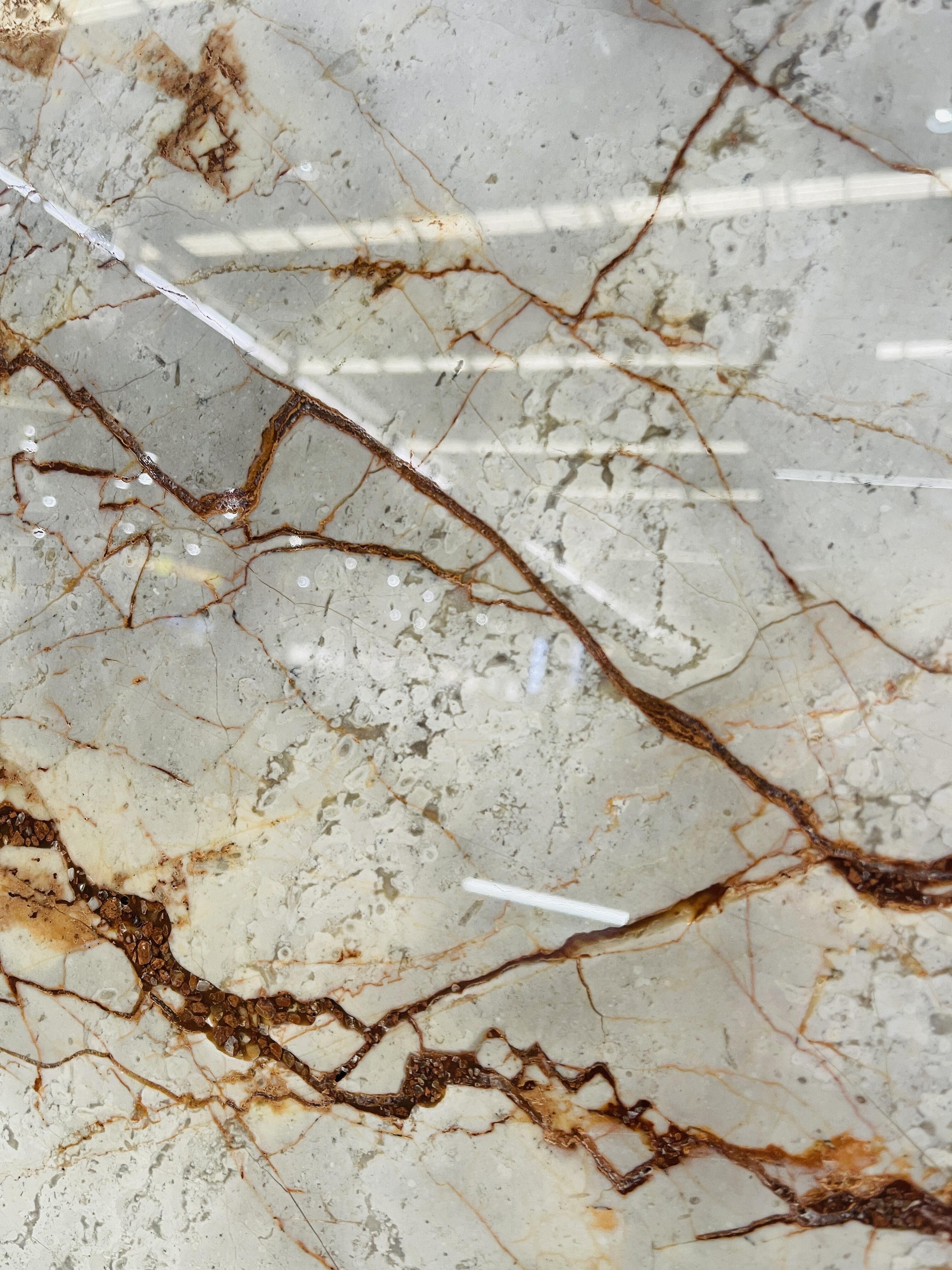
Engineered travertine slabs are innovative stone solutions that merge the natural aesthetic of travertine with enhanced structural performance, designed to address the limitations of traditional natural travertine—such as weight constraints, susceptibility to warping, and installation complexity—while retaining the stone’s signature warm texture and organic appeal. GHY STONE, a premier manufacturer with over three decades of expertise in high-quality stone products, produces these slabs using a precision-engineered layered structure: a thin veneer of natural travertine (typically 3mm–10mm thick, sourced from premium quarries) bonded to a lightweight, high-performance backing material (options include aluminum honeycomb, fiberglass-reinforced resin, or cementitious core), ensuring they deliver superior durability, reduced weight, and versatility for residential and commercial applications. The construction of engineered travertine slabs is optimized for performance through rigorous material selection and manufacturing processes. The natural travertine veneer is sourced from reputable deposits in Italy (Tivoli), Turkey (Bursa), and Iran (Naein)—regions known for travertine with consistent color, uniform pore distribution, and minimal structural flaws. This veneer undergoes precision cutting using diamond-tipped tools to ensure thickness uniformity (±0.2mm tolerance), preserving the stone’s natural texture while minimizing waste. The backing material is selected based on the intended application: aluminum honeycomb backing (with a cell size of 10mm–20mm) is ideal for wall cladding and large-format installations, as it reduces weight by 50–60% compared to solid travertine (weighing 6–10 lbs per square foot vs. 15–20 lbs for solid slabs) while maintaining a flexural strength of ≥15 MPa; fiberglass-reinforced resin backing is suited for high-moisture areas (e.g., bathrooms, pool surrounds) due to its water resistance and mold-inhibiting properties; cementitious core backing is recommended for flooring applications, offering enhanced impact resistance (withstanding 500g weight drops from 1m without chipping). The bonding between the travertine veneer and backing uses a high-strength, low-VOC epoxy adhesive (with a shear strength of ≥2.5 MPa) cured under controlled temperature (60–80°C) and pressure (5–10 kg/cm²) to ensure permanent adhesion, preventing delamination even in extreme temperature fluctuations (-20°C to 80°C). Every engineered travertine slab undergoes comprehensive quality testing, including delamination resistance tests (ASTM D3163, no separation after 100 thermal cycles), water absorption tests (≤0.5% for slabs with resin or honeycomb backing), and flatness checks (±0.3mm over 1m) to meet global industry standards. The aesthetic design of engineered travertine slabs prioritizes authenticity, ensuring the natural beauty of travertine is preserved while offering design flexibility. GHY STONE offers the same surface treatments as traditional travertine: honed finishes (15–20 gloss units) for a smooth, matte look ideal for modern kitchens and bedrooms; polished finishes (60–70 gloss units) for subtle sheen that enhances color depth in commercial lobbies; tumbled finishes (weathered texture) for rustic charm in coastal homes or Mediterranean-style restaurants. Color options mirror natural travertine varieties, including Ivory Beige (light beige with gold undertones), Silver Gray (cool gray with soft veins), Golden Honey (warm gold), and Walnut Brown (deep brown with lighter pores). The thin veneer allows for consistent color and veining across slabs, and GHY STONE provides vein-matching services to create seamless installations—critical for large walls or flooring projects. Engineered slabs are available in standard sizes from 24in x 48in to 5ft x 10ft, with custom cuts (e.g., curved edges, irregular shapes) possible due to the backing’s flexibility, enabling creative applications like curved wall cladding or custom-shaped countertops. Unlike solid travertine, engineered slabs can be produced in extra-large formats without warping, minimizing seams and creating a monolithic look that elevates space aesthetics. Functional features of engineered travertine slabs are tailored to diverse application needs, addressing pain points of traditional stone. Their reduced weight simplifies transportation and installation: a team of 2–3 workers can handle large slabs (5ft x 10ft), compared to 4–5 workers for solid travertine, lowering labor costs by 30–40%. The lightweight nature also expands installation possibilities, allowing use on weight-sensitive substrates like drywall (residential interiors) or lightweight partition walls (commercial offices) that cannot support solid stone. For high-moisture areas, slabs with resin or honeycomb backing are impervious to water, preventing mold growth and staining—ideal for bathroom walls, shower surrounds, or outdoor patios. The backing materials’ thermal stability reduces expansion and contraction, making engineered slabs suitable for regions with extreme climates (e.g., cold winters or hot summers) where solid travertine may crack. In commercial settings, the slabs’ scratch resistance (pencil hardness rating of 5H) withstands heavy foot traffic (retail stores, airport corridors) or frequent use (hotel countertops), maintaining appearance for 15–20 years with proper maintenance. The slabs are compatible with underfloor heating systems, as the thin veneer transfers heat efficiently while the backing prevents heat loss. Installation of engineered travertine slabs is designed to be efficient and accessible, with simplified protocols compared to solid travertine. For wall cladding, slabs with aluminum honeycomb or resin backing can be installed using a combination of adhesive and mechanical fasteners (stainless steel clips) — the lightweight design eliminates the need for wall reinforcement, reducing preparation time by 50%. For flooring, cementitious core slabs are installed using thin-set mortar (formulated for engineered stone) with a 1/8in grout line, and the backing’s flatness ensures easy alignment. High-moisture installations (e.g., shower walls) require a waterproof membrane under the slabs, but the backing’s water resistance eliminates the need for additional sealing. GHY STONE provides detailed installation guides, including substrate preparation (clean, dry, level surfaces) and curing times (24 hours for adhesive, 48 hours for flooring), and offers pre-installation site inspections to ensure compatibility. Temporary protective films are applied to slabs during installation to prevent scratches, and post-installation cleaning is simplified due to the non-porous backing (no trapped dust or mortar). Maintenance of engineered travertine slabs is straightforward, with lower upkeep requirements than solid travertine. Daily cleaning involves wiping with a soft, damp cloth and mild soap to remove dust and spills—abrasive cleaners are avoided to protect the travertine veneer. The non-porous backing prevents moisture penetration, so slabs do not require frequent sealing; a single application of penetrating sealant (formulated for natural stone) every 24–36 months is sufficient to protect the veneer, compared to 12–18 months for solid travertine. Minor scratches on honed or polished finishes can be buffed with a fine-grit sanding pad (6000 grit) followed by sealant application, restoring the surface without professional assistance. Delamination (a rare issue) is covered under GHY STONE’s 10-year warranty, which also includes protection against manufacturing defects like uneven veneer thickness or adhesive failure. GHY STONE’s commitment to sustainability is integrated into every stage of engineered travertine slab production. The thin veneer design reduces natural travertine usage by 70–80% compared to solid slabs, minimizing quarrying impact. Backing materials include recycled content: aluminum honeycomb uses 30% recycled aluminum, fiberglass backing incorporates 25% post-consumer resin, and cementitious cores use 40% recycled aggregate. Manufacturing processes use energy-efficient machinery (solar-powered cutting equipment) and water recycling systems (reducing water use by 65%), and production waste (travertine dust, adhesive scraps) is recycled into construction aggregate or small decorative products. Adhesives and sealants are low-VOC (≤50 g/L), ensuring indoor air quality for residential and commercial occupants. The durability of engineered slabs reduces replacement frequency, lowering long-term environmental footprint. Whether used for wall cladding in a luxury hotel, flooring in a family home, or countertops in a commercial kitchen, engineered travertine slabs by GHY STONE deliver the natural beauty of travertine with enhanced performance, versatility, and sustainability—redefining premium stone solutions for modern applications.
 EN
EN