 EN
EN

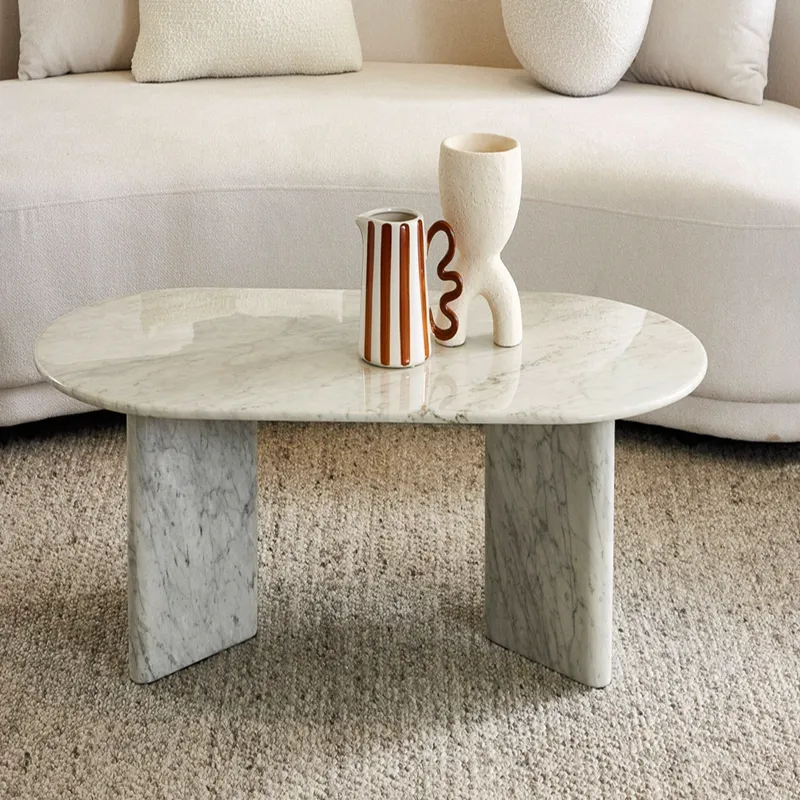
The Timeless Visual and Sensory Harmony of White Marble and Wood
Contrast in Texture, Tone, and Temperature Creates Balanced Sophistication
White marble and wood form a rare material pairing that engages sight, touch, and even temperature perception. Marble’s cool, luminous surface—defined by delicate veining and light-reflective polish—creates openness and clarity. Wood counters with warmth: its grain, depth of tone, and natural texture introduce organic softness and tactile richness. This interplay isn’t merely aesthetic—it’s physiological. The contrast between marble’s thermal coolness and wood’s insulating warmth activates subtle sensory balance, making spaces feel both refined and livable. Polished marble reads as sleek and architectural; brushed, wire-brushed, or hand-hewn wood adds grounded, artisanal character. Together, they prevent sterility and avoid rustic overload—achieving layered sophistication without compromise. Because white marble is inherently neutral, it acts as a quiet backdrop that lets wood’s natural variation shine, reinforcing harmony rather than competition. This equilibrium—rooted in centuries of architectural tradition—is why designers consistently reach for this duo when crafting interiors that must feel elegant, human, and enduring.
Case Study: Soho House Milan — How White Marble and Warm Wood Define Modern Luxury Interiors
Soho House Milan—a reimagination of a historic post office—exemplifies how white marble and wood coalesce to define contemporary luxury. White marble appears deliberately and purposefully: as bar tops, bathroom vanities, and sculptural accent walls—introducing crisp, reflective brightness against the building’s raw brick and ironwork. Warm wood balances this precision: herringbone oak floors, custom walnut furniture, and exposed ceiling beams infuse residential ease and tactile comfort. The design team selected Calacatta marble with soft, cloud-like veining—not stark or dramatic—to visually resonate with the linear rhythm of the wood grain. Lighting was calibrated to reinforce the duality: focused downlights make marble glow, while ambient fixtures allow wood to absorb and radiate warmth. The result is neither cold nor overly cozy, but quietly grand and intimately scaled—a hallmark of modern luxury that prioritizes feeling over flash. This project affirms that thoughtful proportion, material sensitivity, and contextual awareness are what transform a classic pairing into something freshly resonant.
Functional Integration: Applying White Marble and Wood in Kitchens and Bathrooms
Biophilic Design Strategy: Merging Natural Wood Grain with White Marble Surfaces for Calm, Human-Centered Spaces
Pairing white marble with wood taps directly into biophilia—the innate human affinity for natural materials. A 2022 Human Spaces global report found that workplaces and homes incorporating natural textures and patterns improve occupant well-being by up to 15%, supporting reduced stress and enhanced mental clarity. In kitchens and bathrooms—spaces where daily rituals unfold—this synergy is especially potent. White marble reflects and diffuses light, expanding visual volume and lending serenity; wood introduces irregular grain, subtle variation, and warmth that grounds the experience. A marble waterfall island paired with flat-panel oak cabinetry creates a clean yet inviting focal point, where marble’s gentle veining mirrors organic forms found in nature. In bathrooms, a Carrara marble vanity top paired with a live-edge walnut shelf evokes a curated spa retreat—cool smoothness balanced by textured, earthy warmth. For strongest biophilic impact, select marble with soft gray veining and wood with visible, expressive grain. This approach doesn’t chase trends—it fulfills a deeper human need for connection to the natural world, resulting in spaces that feel calm, coherent, and timelessly restorative.
Engineering Seamlessness: Jointing Techniques and Material Pairing Best Practices for Long-Term Durability
Marble and wood respond differently to humidity, heat, and structural movement—so durability hinges on intentional engineering, not just aesthetics. In kitchens, maintain a ⅛-inch expansion gap between marble countertops and adjacent wood surfaces (e.g., butcher block islands or cabinet fronts), filled with flexible, color-matched silicone sealant. This accommodates differential movement without cracking or delamination. In bathrooms, transition from white marble tile floors to engineered wood using a slim T-molding or caulked joint—not rigid grout—which prevents buckling or lifting. Because marble is porous, always apply a penetrating sealer before installation and reseal annually in high-moisture zones like showers and vanities. Under shower installations, add a waterproof membrane beneath the marble substrate. For wood elements, specify kiln-dried stock finished with marine-grade polyurethane or oil-based sealants to resist warping and moisture absorption. When these technical considerations are addressed at the outset, the pairing becomes not just beautiful—but resilient, low-maintenance, and built to age gracefully over decades.
Psychological Resonance: Why White Marble and Wood Evoke Trust, Warmth, and Timelessness
White marble carries centuries of cultural resonance—its luminosity and fine veining evoke purity, permanence, and quiet authority. Wood, in contrast, speaks to shelter, growth, and continuity—its grain a record of time and life. Together, they create a psychological counterpoint: marble’s cool stillness calms; wood’s warmth comforts. Environmental psychology research confirms that exposure to natural patterns—like marble veining and wood grain—reduces cortisol levels and supports cognitive restoration. Neither material shouts; both whisper confidence through restraint. The pairing feels timeless not because it avoids change, but because it aligns with enduring human preferences: light and shadow, structure and softness, permanence and growth. That duality fosters subconscious trust—suggesting stability without rigidity, elegance without distance. It’s why this combination works equally well in a minimalist Tokyo apartment and a sun-drenched Mediterranean villa: it satisfies a universal need for spaces that feel both aspirational and deeply familiar.
FAQ Section
What makes white marble and wood a timeless pairing in interior design?
The combination of white marble and wood balances contrasting elements—coolness versus warmth, luminosity versus texture—creating harmonious spaces that evoke elegance, refinement, and livability. Their complementary characteristics establish psychological and sensory resonance, grounded in centuries of design tradition.
How can white marble and wood be integrated in kitchens or bathrooms?
Pair white marble’s reflective surfaces with warm wood cabinetry or accents to balance light and texture. Examples include marble waterfall islands with oak cabinets or Carrara marble paired with live-edge walnut shelves in bathrooms, enhancing biophilic and serene environments within functional spaces.
What are the durability tips for using white marble and wood together in moisture-prone areas?
Seal marble annually to prevent moisture damage and use flexible silicone sealants between wood and marble surfaces to address differential movements. Employ marine-grade finishes on wood to resist warping and moisture absorption. Such measures ensure resilience and long-term beauty.
Table of Contents
-
The Timeless Visual and Sensory Harmony of White Marble and Wood
- Contrast in Texture, Tone, and Temperature Creates Balanced Sophistication
- Case Study: Soho House Milan — How White Marble and Warm Wood Define Modern Luxury Interiors
- Functional Integration: Applying White Marble and Wood in Kitchens and Bathrooms
- Psychological Resonance: Why White Marble and Wood Evoke Trust, Warmth, and Timelessness
- FAQ Section